
Going from "I'm Fine" to Finding your Fire
Heather Wheeler, Ph.D.
How high performers can reconnect with their emotions for deeper fulfillment and sustainable excellence


Heather Wheeler, Ph.D.
December 13, 2025
What would happen to your organization if your top three leaders left tomorrow? Who have you prepared to step up?
If that question makes you uncomfortable, you're not alone. Most organizations have talent strategies. Few have leadership multiplication strategies.
The difference between the two could determine whether your company thrives or merely survives the next decade.
In today's competitive landscape, the organizations that win aren't just attracting top talent. They're systematically developing leaders at every level and from every generation.
They are developing leaders who develop other leaders. They're building leadership ecosystems, not just leadership teams.
This approach turns generational differences into competitive advantages. Rather than seeing different work styles and values as problems to solve, these organizations leverage diverse perspectives to drive innovation and performance.
This isn't about being nice or creating warm feelings. This is about building organizational capability that outlasts your tenure. It's about creating a sustainable competitive advantage through wholistic people and leader development.
I learned this lesson in an unexpected place. Second year university, behavioral psychology class. I was paralyzed with fear because we had to train rats. But a dog bite as a child had left me shaking too much to even hold the rat, let alone teach it something. My professor could have done what many leaders do. Told me to toughen up. Pushed me into the deep end to "build character." Or dismiss me as just another student in his full courses. And someone who just "didn't have what it takes" to make the grade.
Instead, he sat with me. Understood the real issue. Figured out what I needed to feel safe enough to face this challenge. Made sure I knew he saw my potential behind my fear. Then walked me through a gradual exposure process that helped me not just complete the assignment but excel at it. I not only got my A+, I conquered my anxiety.
Little did this professor know, he sparked the inspiration for my entire career. For helping many others overcome their fears. Including all the developing psychologists and teams of professionals I mentored over the past 20 years.
That professor taught me something profound about leadership development. The best leaders don't just transfer knowledge. They transform the person receiving it.
Throughout my career in healthcare and high-performance sport, I've observed two distinct approaches to developing people.
The first treats potential future leaders as problems to be solved. They may focus on skill development but they don't teach people how to use those skills in a way that plays to their strengths. How to be a great team member, to learn how to learn, or to learn how to teach others. They don't build the person. They don't inspire people to lead.
Organizations led this way experience high turnover, low engagement, and leadership gaps when key people leave. They're constantly recruiting rather than developing.
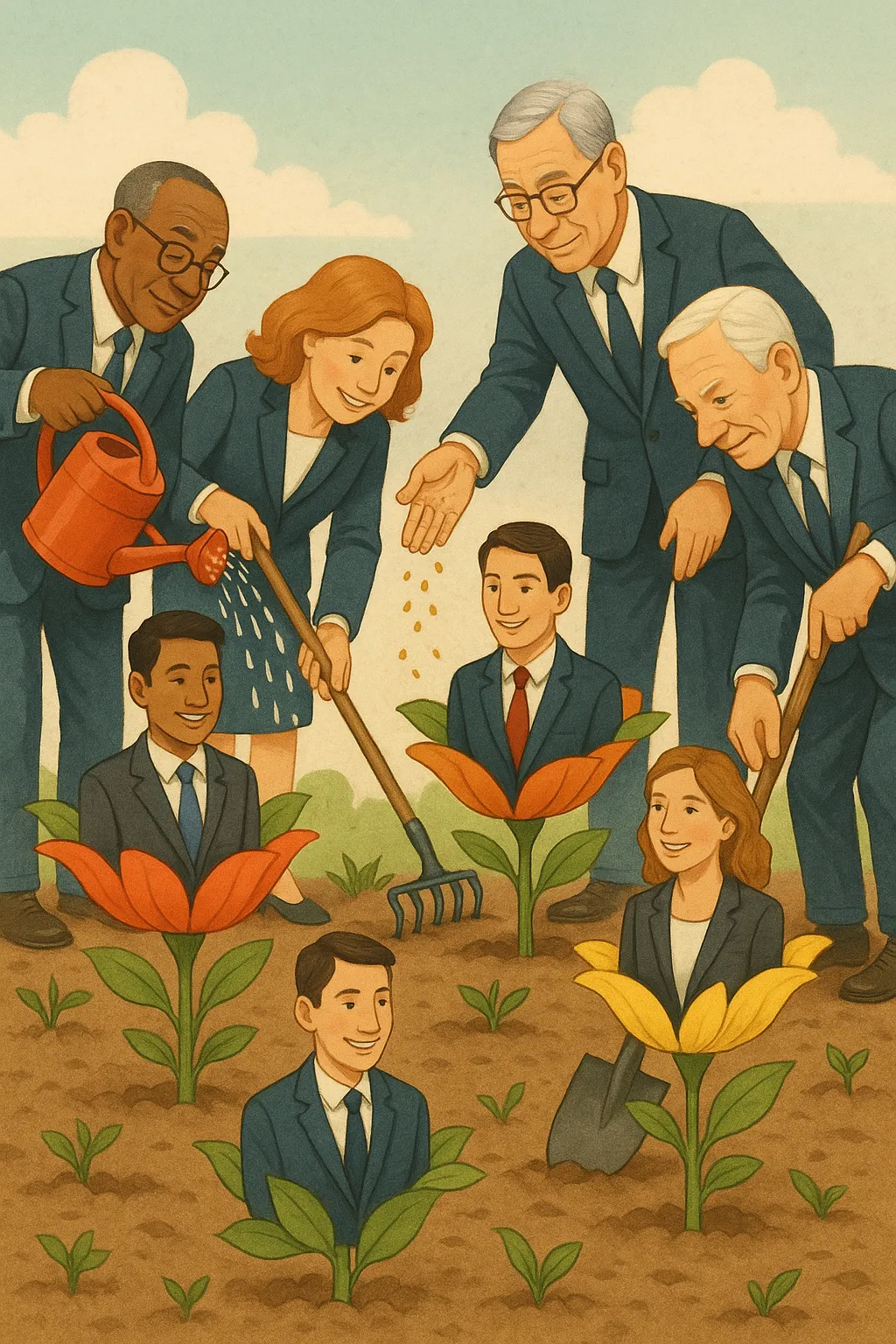
The second type of leader embraces what I call the gardener mindset. They study what wants to grow in each person and create conditions for it to flourish. These leaders look at the whole picture, see every person as unique, ask questions rather than make assumptions, dig deeper than surface-level problems, and understand how each individual fits within the team. They use the right tools for developing each person uniquely and see potential beyond failure or current limitations.
These leaders understand that different generations may bring different perspectives, work styles, and values - and they leverage these differences as competitive advantages rather than obstacles to overcome.
Organizations with leaders who embrace the “gardener mindset” report higher retention rates, stronger succession pipelines, and cultures where people actively seek development opportunities.
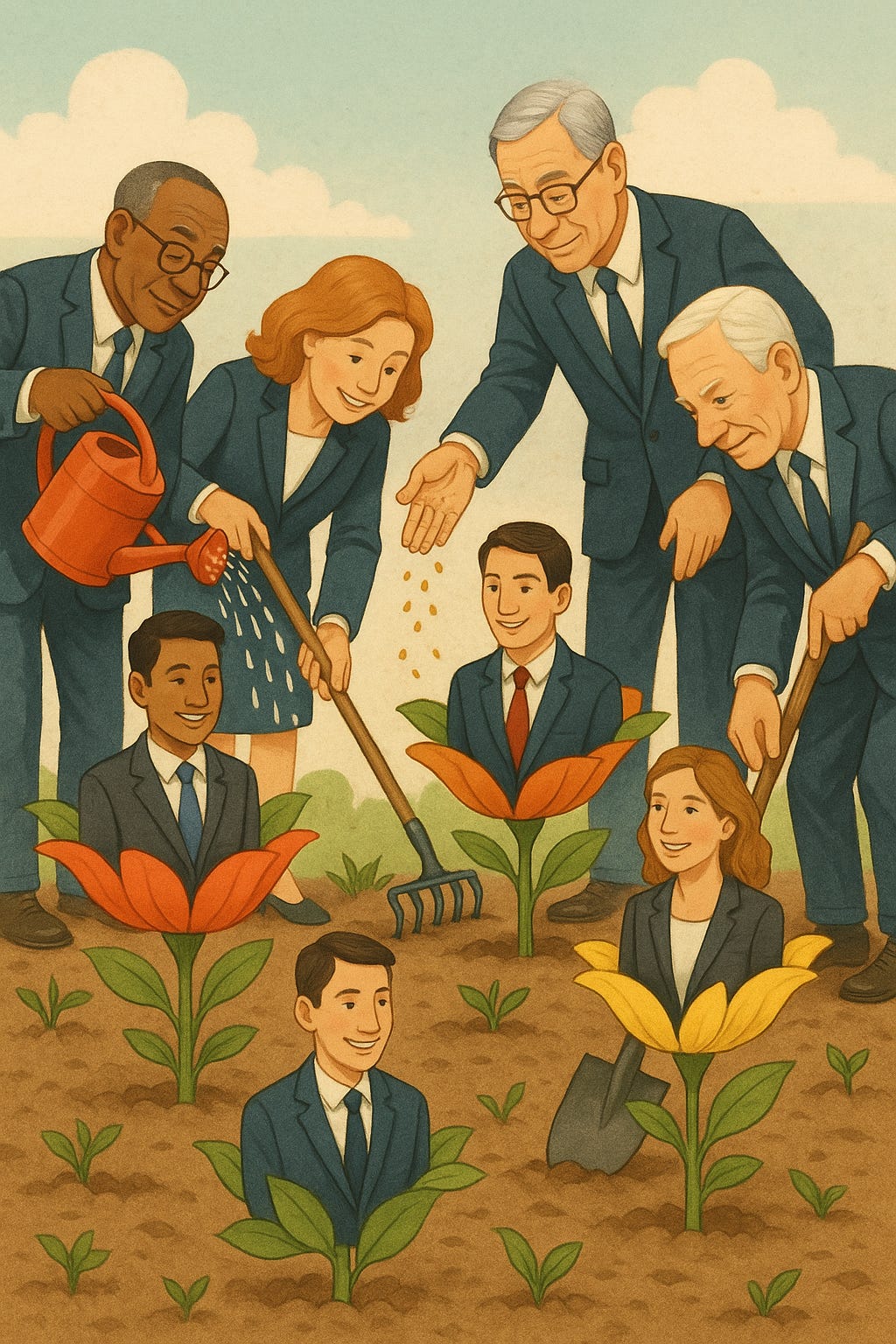
The gardener leadership approach is grounded in a practice of intentional mentorship. It happens one relationship at a time with each developing leader on your team.
There are 3 essential nutrients to focus on when growing future leaders. The key is to weave them into as many leadership interactions you have, including individual and team meetings.
Content: What skills are they developing? What knowledge do they need? What tools will help them become competent?
Process: What personal style do they have in applying their skills and knowledge? How can they apply those skills in a more effective way or in difficult situations? What conditions do they need to keep learning and performing at their best? What energizes and motivates them? What shuts them down? Understanding that different generations may respond differently to feedback, recognition, and challenge?
Relationship: How are we working together? What does each of us need to keep growing? How can we communicate in ways that build rather than break?
Think of this like tending a garden. Content is knowing which seeds to plant and when. Process is constantly observing what conditions each plant needs - how they respond to sun, water, and soil. Relationship is being attuned to how your care is being received and understanding when a tool isn't working so you can take a different approach.
Intentional mentorship is not an additional responsibility on top of leadership.
It IS leadership.
When you develop someone properly, you're not just improving their current performance. You're creating future organizational capability and resilience. You're building your succession plan in real time.
Instead of scrambling to fill leadership gaps, you have multiple people ready to step up. Instead of losing institutional knowledge when people leave, you have systems for transferring and building on that knowledge.
And people will actually want to step into the lead because they will be confident to do so. You will have created the conditions for them to feel safe enough to take that leap.
The ecosystem approach creates what I call the leadership multiplier effect. Every person you develop properly goes on to develop others. Your influence compounds rather than just adding.
This multiplication effect is how cultures change. How organizations transform. How entire industries evolve.
Whether you're leading an organization, managing a team, or developing professionals, you have a choice to make. Will you embrace the gardener mindset or simply manage people, roles and tasks?
Your choice today shapes tomorrow's leaders. The world needs more leaders with the gardener mindset. Gardener-leaders who pay attention to the 3 essential nutrients for growth: Content, Process, and Relationship.
That professor who helped me with my fear didn't just teach me behavioral psychology. He taught me how to lead others. To see potential where others saw problems. To create safety where others created pressure. To transform people instead of just transfer knowledge.
Twenty years later, I'm still using what he taught me. So are the people I've mentored. So will the people they mentor. The ripple effect will hopefully go on for generations.
So be a leader with a gardener mindset. That's how you change the world. Build a better future. One relationship at a time.
Who are you systematically developing?
What leadership gaps could you close by becoming more intentional about mentorship?
What would change if developing others became your primary leadership strategy rather than an additional task?
The answers to these questions will determine if your organization will thrive, rather than just survive, for generations to come.
Ready to develop your skills as a leader who multiplies organizational capability?
Set up a call with me here: 30-minute Discovery Call with Dr. Wheeler
Learn how systematic mentorship can transform your leadership pipeline and create sustainable competitive advantage
Written by
Heather Wheeler, Ph.D.
How high performers can reconnect with their emotions for deeper fulfillment and sustainable excellence

Heather Wheeler, Ph.D.
Thriving in what you love to do even when there’s no “work-life balance”

Heather Wheeler, Ph.D.
How to close the REAL Gaps to set the stage for even higher performance

