



My mother was relentless about thank you notes.
Every birthday gift, every Christmas present, every kind gesture from a neighbour – out came the stationary, the good pen, and her expectant look that said "you're not doing anything else until this is written."
It was annoying as a teenager. "But Mom, I already said thank you when I opened it!"
"That's not the point, Heather. A written thank you shows you took extra time to think about their kindness. It shows you care enough to make an effort."
Fast forward thirty years and, of course, I'm making my own kids write thank you notes. The format has shifted a bit – sometimes it's a text, sometimes an email, occasionally (to my delight) an actual handwritten card. But they understand the impact it has on the people who've given them gifts over the years.
My mother wasn't just teaching me etiquette. She was teaching me how to build and maintain relationships.
What I didn’t realize at the time was that she was also teaching me the foundations for being an effective leader.

Please, thank you, & sorry aren't just pleasantries.
They are the MOST important words in effective leadership.
They are the building blocks of ALL relationships.
They are psychological signals that create the foundation for everything else we want to achieve as leaders.
Research backs up my experience as a clinical psychologist and leader on this. (Just check out Deci & Ryan’s Self-Determination Theory).
The basic needs required for humans to thrive include Autonomy, Belonging, Competence, and Security (ABCs).
Leaders who find ways to help people get these needs met are going to see better results. The ABCs are the foundation for human motivation. For self-actualization. For wellbeing. For sustainable excellence.
And our words have the power to meet those ABCs.
"Please" signals Autonomy – I'm asking, not commanding. Your choice matters. You’re in control.
"Thank you" creates Belonging – I see your contribution. You matter to this team. It also says that your effort is paying off. You are making progress and helping this team achieve something. This makes people feel Competent and motivated to keep working hard.
"Sorry" builds Security – I care about how my decisions affect you. This is a safe place to be an imperfect human.
When we skip these words, we're essentially communicating the opposite: You don't have choices. Your efforts don't matter. Your feelings aren't my concern.
No wonder teams shut down. Or people “quietly quit.”
Culture isn't built through mission statements on the wall.
It's built through daily micro-interactions – the words we choose, the tone we use, the respect we show.
During my 18 years transforming healthcare delivery, I learned this firsthand.
When I led our team through the process of cutting mental health wait times from two years to two months, the resistance wasn't really about new protocols or workflows.
It was about fear, uncertainty, and ultimately, the ABCs.
People needed to know they mattered in the new system. They needed to feel like they had choices and a sense of control. (Even if they didn’t agree with the changes). They needed to feel a sense of purpose and competence. And they wanted to make sure they weren’t going to be shut out or let go if they made mistakes along the way. Or voiced their concerns and opinions.
To help with this massive transition, I made sure that everyone’s voice was heard. I had an open-door policy and met with all team members regularly.
I was responsive to concerns in a timely manner and invited question periods. I dedicated time at the beginning of our weekly rounds to discuss the process of how this change was affecting people, not just talk about content of the changes.
But most importantly, I used language intentionally:
"Thank you for being willing to try this new approach, even though it feels uncertain."
"Please let me know what you need to feel confident with these changes."
"I'm sorry this transition is stressful. Let's figure out how to support each other through it."
These weren't employee therapy sessions. They aren’t words that suggest results or performance expectations don’t matter. Or that they were able to stop the changes from happening. They are words that say “I see the effort you’re giving” and “I see what you need to keep going.”
I can’t explain it by research. But I felt the impact these simple words had on this team.
I know that these things showed that I respected their experience in this transformation. And that related directly to how much they respected me as a leader.
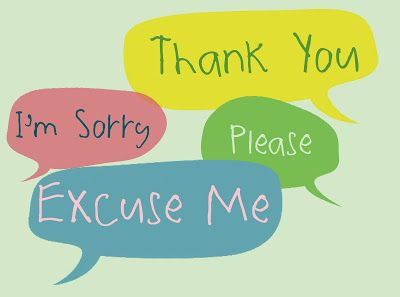
If you need even more motivation to use Please, Thank you, and Sorry more often as a leader, remember this:
1. They help regulate the nervous system. When the nervous system is signaling danger during uncertain times, we rely mostly on other people to help us feel safe. That other people ‘have our backs.’ When things are hard, we need to feel connected to someone or something bigger than us – that we’re not alone – and that we can keep going. It’s built into our survival system as mammals to look towards leaders in the tribe for this.
2. They build trust and respect. If there’s one thing I’ve learned in my work with Olympic teams, healthcare systems, and corporate environments, it's nearly impossible to trust or respect someone who never says please, thank you, or sorry. Think about it. If someone consistently makes demands without courtesy, takes your efforts for granted, and never acknowledges when their decisions impact you, what does that tell you about how they see you? As a person or as a tool? Would you respect someone who doesn’t say these things? So it goes back to the golden rule, doesn’t it? Treat others as you’d like to be treated and bonus, you get the trust and respect you deserve as well.
[Side note: how you treat others goes “viral” in teams – for better or worse – so if impression management motivates you more that what people need, this is still a good tactic].
3. They help unlock potential. I believe that everyone – no matter where they are on the ‘hierarchy’ of an organization - has talent and the ability to contribute to a team’s success. What separates good from great is the ability to build relationships that unlock potential. When you use please, thank you, and sorry consistently, you are unblocking the self-protection that limits potential. Because you’re building psychological safety for them to go all-in without fear. And productivity can only come from this place.
Optimizing your team’s potential also comes from the willingness of people to listen to what you have to teach. And these 3 simple words make it easier for people to listen to you. As a leader, this is a simple thing you can do to open ears and minds to all that hard-won wisdom you have to offer them.
These words cost nothing but signal everything about your leadership philosophy. They tell people whether you see them as partners in excellence or simply resources to be managed.
All it takes is 3 words. And you can start right now. You don't need budget approval or organizational restructuring. You just need to pay attention to the words you're using (or not).
Using these three words isn’t about being "nice." It’s about being effective.
The ROI on these 3 words is huge.
Don’t take my word for it.
The next time you intentionally use “Please, Thank you, or I’m sorry”…pause… watch what happens to the energy in the room. Watch how connected people feel to you. And to your mission and vision as an organization.
My mother was right. Her thank you notes really paid off.
At the end of the day, words matter. They aren’t just words. They signal ABCs. They help us connect and feel safe. They build trust and respect. They unlock potential for the individual and the teams we lead.
Sometimes the most sophisticated leadership strategy is as simple as the words your mother taught you.
Please, thank you, and sorry aren't just good manners. They're good business.
What words do you need to use more intentionally with your team? I'd love to hear your thoughts – hit reply and let me know.
Written by

Heather Wheeler, Ph.D.
...and the Dimmer Switch mentality that helped him excel AND feel whole again

Heather Wheeler, Ph.D.
Seeing the hidden trauma beneath compulsive exercise and disordered eating


.svg)